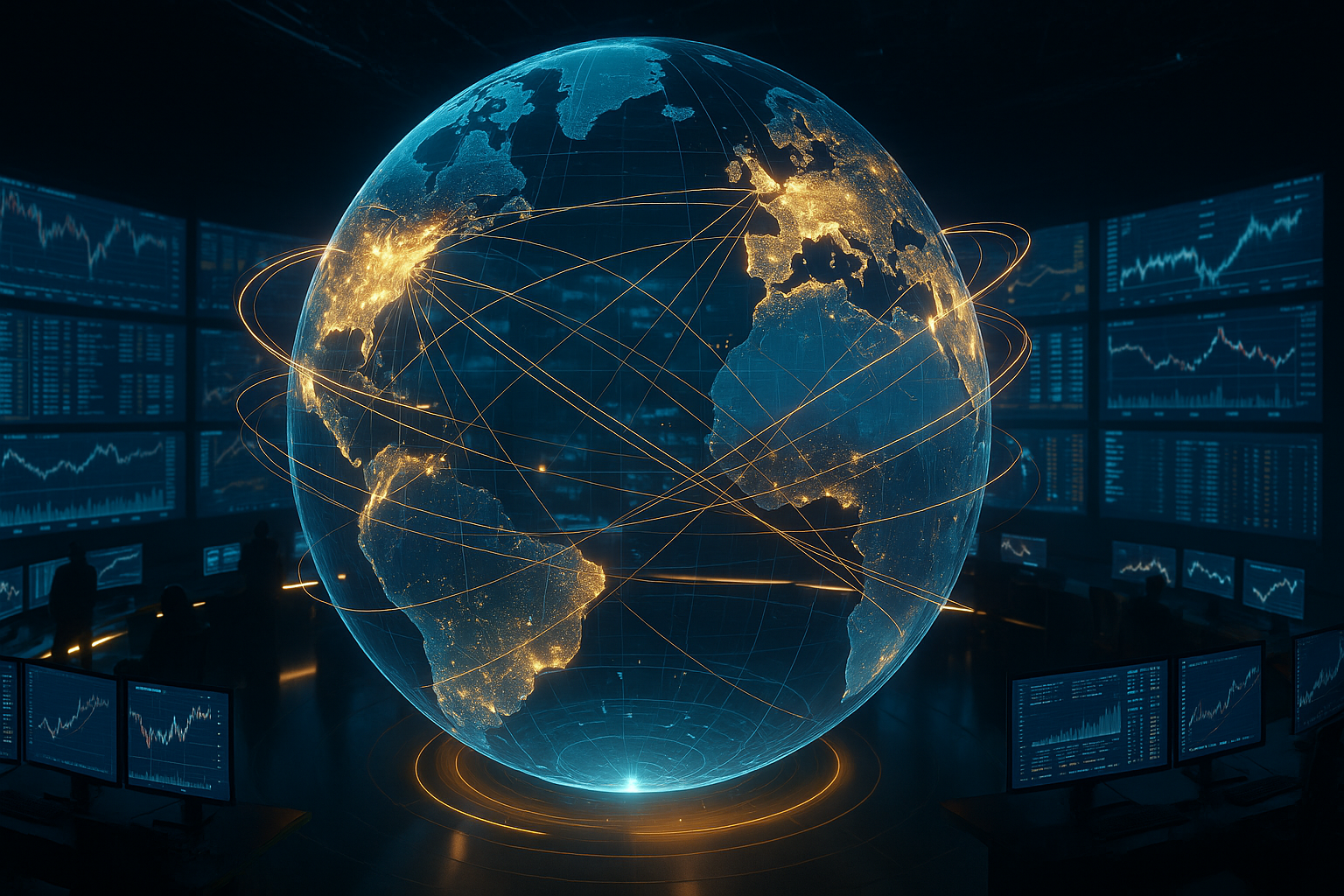
Imagine a marketplace that never sleeps, where trillions of dollars change hands every day, connecting Tokyo to London, New York to Sydney. This is the world of global trading, a dynamic and intricate ecosystem that powers the modern economy. It’s where currencies are exchanged, commodities are priced, and the collective pulse of global business is measured through indices. For many, it seems like a complex arena reserved for Wall Street wizards. But what if you could understand its fundamental mechanics? This guide is your passport into this fascinating world. We will demystify the core components, from the financial markets themselves to the risks and regulations that shape them, empowering you with the knowledge to navigate this digital frontier with confidence.
Introduction to Global Trading: The World’s Largest Marketplace
At its heart, global trading is the simultaneous buying and selling of financial instruments across international borders. It’s the mechanism that allows a company in Germany to pay a supplier in Japan, a pension fund in Canada to invest in the growth of Indonesian tech firms, and an individual in Brazil to speculate on the price of gold mined in South Africa. This 24-hour activity creates a continuous flow of capital, determines exchange rates, and provides a real-time barometer of global economic health. Before we delve deeper, it’s crucial to clarify a common point of confusion: the difference between trading and investing. While both involve financial markets, their philosophies, timeframes, and risk appetites are fundamentally different.
-
Trading is a sprint. Traders are artists of the short-term. They aim to profit from market volatility, buying and selling instruments over periods ranging from seconds to a few months. Their focus is on technical charts, market momentum, and economic news cycles. A trader might buy a stock expecting it to rise 3% over the next week, then sell it regardless of the company’s long-term prospects.
-
Investing is a marathon. Investors are architects of the long-term. They buy and hold assets for years, even decades, with the goal of building wealth gradually through compounding returns and fundamental growth. An investor buys a stock to own a piece of a company they believe will be more valuable in 20 years, largely ignoring short-term price swings.
Think of it this way: a trader is a surfer, riding individual waves of price action to the shore. An investor is the captain of a ship, steering a steady course through the ocean’s swells and troughs to reach a distant destination. Neither is inherently better; they are simply different approaches suited to different personalities and goals.
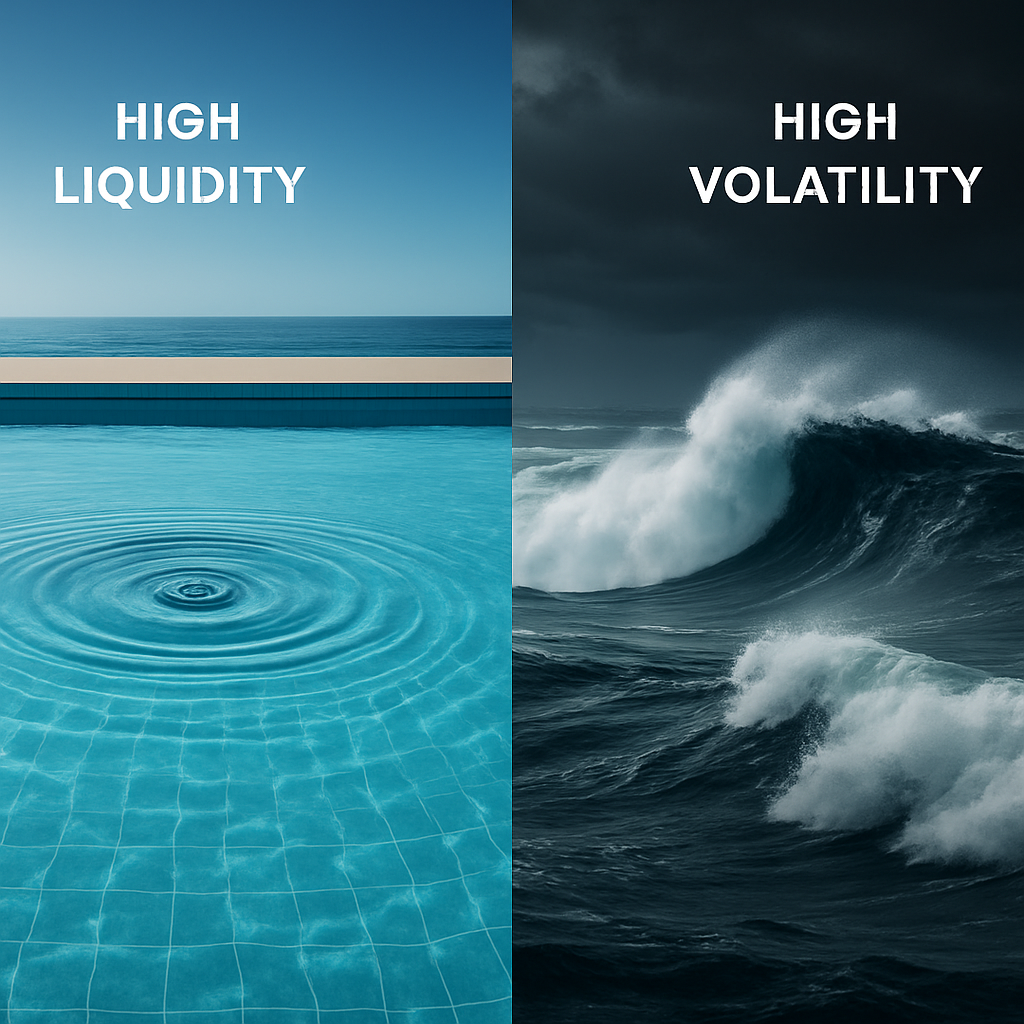
Two concepts are the very lifeblood of this activity: liquidity and volatility.
-
Liquidity describes how easily an asset can be bought or sold at a stable price. A highly liquid market, like the Forex trading market for major currency pairs (e.g., EUR/USD), has a high volume of buyers and sellers. You can enter or exit a position instantly with minimal impact on the price. An illiquid market, like a small-cap stock on a minor exchange, might mean you struggle to find a buyer without significantly lowering your asking price.
-
Volatility measures the frequency and magnitude of price changes. High market volatility means prices are swinging wildly, presenting both significant opportunities for profit and substantial risks of loss. Low volatility means prices are relatively stable.
Understanding the interplay between these two forces is your first step toward mastering global trading.
Understanding the Global Financial Markets: The Playing Fields
The term “financial markets” isn’t a single entity but a collection of interconnected arenas, each with its own unique characteristics and participants. Let’s explore the major ones you’ll encounter.
The Foreign Exchange (Forex) Market
This is the granddaddy of all markets. The Forex market is the world’s largest and most liquid, with a daily trading volume exceeding $6 trillion. It’s a decentralized, over-the-counter (OTC) market where currencies are traded in pairs (e.g., EUR/USD). It operates 24 hours a day, five days a week, moving across major financial centers. Its primary drivers are global trade, interest rates, and geopolitical stability.
The Cryptocurrency Market
The new kid on the block, crypto trading, is a digital and decentralized market for cryptocurrencies like Bitcoin and Ethereum. It’s known for its extreme market volatility and 24/7 operation. While younger and less regulated than traditional markets, it offers unprecedented accessibility and the potential for high returns, albeit with commensurate risk.
The Commodities Market
This is where raw or primary products are traded. Commodities trading is typically split into two categories:
-
Hard Commodities: Natural resources that are mined or extracted (e.g., gold, oil, copper).
-
Soft Commodities: Agricultural products or livestock (e.g., coffee, wheat, cattle).
Trading commodities is often a way to hedge against inflation or speculate on geopolitical events and supply disruptions.
The Indices Market
Instead of buying individual stocks, you can buy a basket of them. Indices trading involves speculating on the price movement of a stock market index, which represents a segment of the stock market. Examples include the US S&P 500, the UK’s FTSE 100, and Japan’s Nikkei 225. It’s a popular way to gain exposure to an entire economy or sector without picking individual winners and losers. These markets are deeply interconnected. A surprise announcement from the US Federal Reserve (central banks) doesn’t just affect the US Dollar (Forex); it can send shockwaves through indices (as company valuations are reassessed), commodities (as the Dollar-priced gold and oil react), and crypto (as risk appetite shifts). A real-world example was the COVID-19 pandemic. Initial panic crashed global indices and oil prices, while causing a surge in the US Dollar due to a “flight to safety.” Understanding these connections is key to being a savvy trader.
The Core Purpose: Trading vs. Investing in Practice
Let’s make the distinction between trading and investing more concrete with strategies and psychology.
A trader’s toolkit is filled with short-term strategies:
-
Day Trading: Opening and closing positions within the same day, avoiding overnight risk.
-
Swing Trading: Holding positions for several days or weeks to capture short-term trends.
-
Scalping: Making dozens or hundreds of trades in a day to profit from tiny price movements.
The psychology here is disciplined and reactive. Traders must be ruthless with risk management, using stop-loss orders to cap losses and taking profits at predetermined levels. Emotions are the enemy. An investor’s approach is fundamentally different, relying on:
-
Fundamental Analysis: Evaluating a company’s financial health, management, and industry position.
-
Value Investing: Buying assets that appear undervalued based on their intrinsic worth.
-
Buy-and-Hold: Acquiring quality assets and holding them through market cycles.
The investor’s psychology requires patience and a strong stomach to endure market downturns without panicking.
Example in Action:
Imagine a tech company, “TechNovate,” announces a breakthrough product.
-
The trader might buy the stock at the market open after the announcement, anticipating a short-term hype-driven price surge of 10% by lunchtime, and then sell to capture the profit.
-
The investor, who has held TechNovate stock for years, sees the news as confirmation of their long-term thesis. They do nothing, believing the company’s value will continue to grow over the next decade.
Both can be profitable; they are simply playing different games on the same field.
The Heartbeat of the Markets: Liquidity and Volatility
To succeed in global trading, you must develop an intimate understanding of liquidity and volatility. They are the yin and yang of the financial world.
(H3) How Liquidity Works in Financial Markets
Liquidity is about ease of transaction. A highly liquid market has:
-
Tight Spreads: The difference between the buy (bid) and sell (ask) price is small.
-
High Volume: A large number of transactions occur every second.
-
Market Depth: A large number of orders are sitting at various price levels above and below the current price.
Why does this matter? High liquidity means you can execute trades quickly and cheaply. For a retail trader, this translates to lower transaction costs and less “slippage” (the difference between your expected execution price and the actual price you get). The major Forex pairs are the epitome of this. In an illiquid market, you might be forced to sell at a much lower price than intended because there are simply no buyers.
Understanding Market Volatility for Traders
Volatility is the statistical measure of the dispersion of returns for a given security or market index. In simpler terms, it’s how much the price “jiggles” around.
-
High Volatility: Large, rapid price swings. This is the playground for many short-term traders, as it creates more profit opportunities. The crypto trading market is a classic example.
-
Low Volatility: Small, slow price movements. This environment is favored by long-term investors and certain options strategies.
Traders use tools like the Volatility Index (VIX), often called the “fear gauge,” to measure the market’s expectation of volatility. The Average True Range (ATR) is another popular indicator that shows the average range a security moves in a given period.
The key takeaway is that volatility is a double-edged sword. It can generate rapid profits but can just as quickly lead to devastating losses. A solid risk management strategy is non-negotiable in volatile conditions.
The Players: Role of Institutions, Brokers, and Retail Traders
The financial markets are a stage, and different actors play distinct parts. Understanding the role of institutions in global trading versus retail participants is critical to seeing the whole picture.
Institutional vs. Retail Traders
-
Institutional Traders: These are the “whales.” They work for banks (like J.P. Morgan), hedge funds (like Bridgewater), pension funds, and mutual funds. They trade with enormous capital, often in the billions. Their orders can move markets. Their advantages include direct market access, ultra-low transaction costs, and teams of analysts.
-
Retail Traders: These are individual traders like you and me. We are the “minnows” in the ocean. We trade with our own capital through intermediaries. While we can’t move markets with a single order, our collective power is significant. The rise of the internet and online brokers has democratized access, leveling the playing field in unprecedented ways.
The Crucial Role of Brokers
Brokers are the essential intermediaries that provide retail traders access to the markets. When you place a trade on your phone, you’re not connecting directly to the interbank system; you’re placing an order with your broker, who then routes it to a liquidity provider.
A broker’s primary functions are:
-
Providing a Trading Platform: The software you use to analyze charts and execute trades (e.g., MetaTrader, Thinkorswim).
-
Providing Leverage: Allowing you to control a large position with a relatively small amount of capital (a powerful but dangerous tool).
-
Executing Orders: Filling your buy and sell orders.
Brokers make money through spreads (the bid-ask difference) and/or commissions. Their reliability and execution speed are paramount, which is why choosing a regulated broker is so important.
The Puppet Masters: Central Banks and Macroeconomic Influence
If anyone holds the strings in the global trading theater, it’s the central banks. Their policies are the single most powerful driver of long-term market trends, especially in the Forex and indices markets.
The Impact of Central Banks on Trading
Central banks (like the US Federal Reserve, the European Central Bank, and the Bank of Japan) manage a country’s monetary policy. Their primary tools are:
-
Interest Rates: This is their most powerful weapon. Raising interest rates makes a currency more attractive to hold (higher yield), which can cause it to appreciate. Conversely, lowering rates can stimulate a economy but often weakens the currency.
-
Quantitative Easing (QE) & Tightening (QT): QE involves a central bank creating money to buy government bonds, flooding the financial system with liquidity to spur lending and investment. QT is the reverse—reducing the money supply.
Real-World Example:
In 2022-2023, the US Federal Reserve began a series of aggressive interest rate hikes to combat inflation. This had a profound impact on global trading:
-
Forex: The US Dollar (USD) surged to multi-decade highs against other major currencies like the Euro and Japanese Yen.
-
Indices: Stock markets around the world fell, as higher rates make borrowing more expensive for companies and reduce the present value of future earnings.
-
Commodities: Gold, which pays no interest, became less attractive compared to interest-bearing assets, putting downward pressure on its price.
A trader who understands these dynamics could have positioned themselves to profit from the strong USD trend.
Navigating the Rules: Legal Frameworks and Trading Regulations
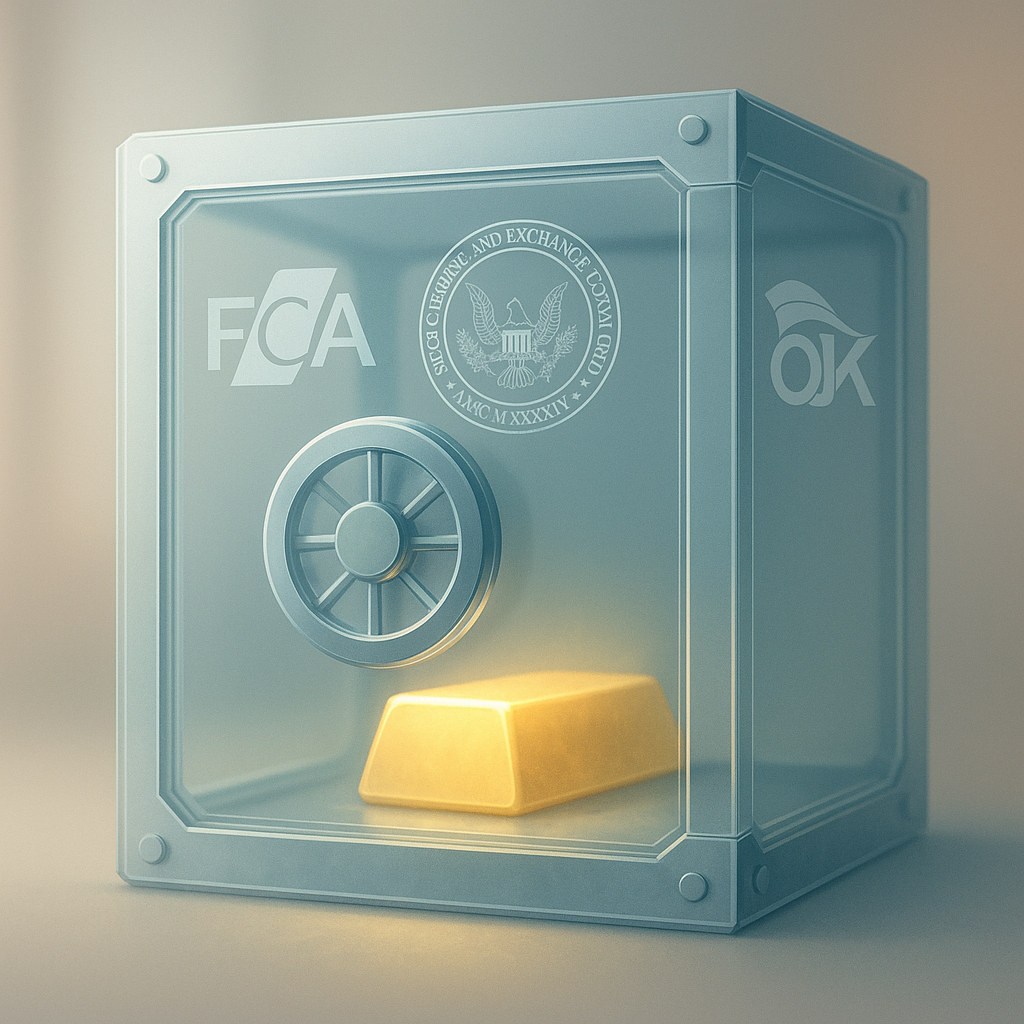
Trading in an unregulated environment is like driving without traffic laws—chaotic and dangerous. Trading regulations exist to protect investors, ensure market integrity, and maintain stability.
Why Regulation is Critical
Regulatory bodies enforce rules that prevent fraud, market manipulation, and ensure that client funds are segregated and protected. For a trader, using a regulated broker provides a layer of security and a path for recourse if something goes wrong.
Key Regulatory Bodies
-
Financial Conduct Authority (FCA – UK): Renowned for its strict standards and robust investor protection schemes (e.g., the Financial Services Compensation Scheme).
-
Otoritas Jasa Keuangan (OJK – Indonesia): Regulates financial services in Indonesia, ensuring market stability and consumer protection.
-
Money Services Business (MSB – US/Canada): While not a direct market regulator like the FCA, an MSB registration is a legal requirement for businesses that transmit or exchange money, including many Forex and crypto brokers operating in North America. It’s a baseline level of oversight.
How to Verify Broker Legitimacy
Before depositing a single dollar, you must:
-
Check the broker’s website for their regulatory license number.
-
Go to the regulator’s official website (e.g., FCA register) and verify that the license is current and covers the services the broker is offering.
-
Be wary of brokers offering unrealistic bonuses or guaranteed profits—these are classic red flags.
Understanding the legal frameworks for trading is not just about compliance; it’s a fundamental part of your risk management strategy.
Your Trading Desk: Basic Trading Infrastructure
To participate in global trading, you need the right tools. Your basic trading infrastructure is your digital cockpit, and its reliability can be the difference between profit and loss.
-
Trading Platforms: This is your primary interface. MetaTrader 4 (MT4) and MetaTrader 5 (MT5) are the industry standards, known for their stability, customizability, and vast library of technical indicators and automated trading scripts (Expert Advisors). Other popular platforms include cTrader and TradingView.
-
Order Types: Knowing how to enter and exit trades is crucial.
-
Market Order: Execute immediately at the current market price.
-
Limit Order: An order to buy or sell at a specific price or better.
-
Stop-Loss Order: An order designed to limit a loss on a position by closing it automatically at a predetermined price.
-
Take-Profit Order: An order that closes a position once it reaches a certain profit level.
-
-
Servers, APIs, and Connectivity: For professional and high-frequency traders, physical proximity to exchange servers and the speed of their internet connection (low latency) are critical. Most retail traders rely on their broker’s servers. An API (Application Programming Interface) allows traders to connect their trading software to other tools for advanced analysis or automated trading.
The reliability of your data feed is paramount. A delayed or frozen price feed can lead to catastrophic misjudgments. This is why established platforms and reputable brokers are essential—they invest heavily in robust technological infrastructure.
The Tools of the Trade: Overview of Trading Instruments and Risks
Now, let’s take a deeper dive into the primary trading instruments and the specific risks associated with each.
Forex Trading Explained
-
What it is: Trading currency pairs. If you think the Euro will strengthen against the US Dollar, you buy EUR/USD.
-
Key Drivers: Interest rate differentials, economic data (GDP, employment), geopolitical events.
-
Specific Risks: Leverage risk is immense, as Forex is typically traded on high margin. A small move against you can result in a significant loss. Geopolitical risk can cause sudden, sharp moves.
Crypto Trading Explained
-
What it is: Buying and selling cryptocurrencies or crypto derivatives.
-
Key Drivers: Technological developments, regulatory news, market sentiment, and adoption by institutions.
-
Specific Risks: Extreme volatility, regulatory uncertainty, security risks (exchange hacks), and liquidity risk in smaller altcoins.
Commodities Trading Explained
-
What it is: Speculating on the price of physical goods. This is often done via Futures contracts or CFDs.
-
Key Drivers: Supply and demand, weather events, geopolitical tensions (especially for oil), and the strength of the US Dollar.
-
Specific Risks: Geopolitical risk, “contango” and “backwardation” in futures markets, and the physical nature of the underlying asset can lead to unique price dynamics.
Indices Trading Explained
-
What it is: Gaining exposure to a basket of stocks through a single instrument.
-
Key Drivers: Overall economic health, corporate earnings season, and monetary policy.
-
Specific Risks: Systemic or “market” risk—an event that affects the entire market will drag the index down, regardless of the performance of individual companies.
Universal Risk Management Strategies
Regardless of the instrument, managing risk is your number one job.
-
Use Stop-Losses Religiously: Always know your maximum possible loss before entering a trade.
-
Use Proper Position Sizing: Never risk more than 1-2% of your trading capital on a single trade.
-
Understand Leverage: Leverage magnifies both gains and losses. Use it sparingly, especially as a beginner.
-
Diversify: Don’t put all your capital in one market or one type of trade.
The Evolving Landscape: Emerging Trading Concepts
The world of global trading is constantly innovating. New strategies and platform integrations are emerging to help traders capitalize on specific market conditions. Concepts like Event Trading (trading based on scheduled economic announcements like Non-Farm Payrolls), Rhythm Trading (identifying and trading with the natural ebb and flow of market sessions), and Ticket Trading (a model focused on high-speed, high-volume trade execution) are becoming more mainstream. Platforms like MexQuick are examples of this evolution, integrating these advanced methodologies directly into their infrastructure. For a trader, this means access to more sophisticated tools and execution models that were once the exclusive domain of large institutions. Staying informed about these developments can provide a significant edge.
Conclusion: Your Journey Begins Now
The world of global trading is vast, complex, and endlessly fascinating. We’ve journeyed from its fundamental definitions, through the diverse landscapes of financial markets like Forex, crypto, commodities, and indices, and unpacked core concepts like liquidity and volatility. We’ve met the key players, from the mighty central banks to the individual retail trader, and stressed the critical importance of trading regulations and a solid basic trading infrastructure. Remember, successful trading isn’t about predicting the future; it’s about probability, discipline, and rigorous risk management. It’s a skill built through continuous education, practice, and emotional control.
Your Call to Action:
The single best step you can take now is to open a demo trading account with a reputable, regulated broker. Practice the concepts you’ve learned here. Test strategies, place trades without real money, and get comfortable with the platform and the pace of the markets. Treat this demo account as seriously as a live one—it is your most valuable training ground. The markets will always be there, offering a lifetime of learning and opportunity. Your journey to understand them starts with a single step. Take that step today.