The evolution of Web3 is increasingly defined not by speculative asset cycles, but by the foundational infrastructure that enables genuine utility and user adoption. Enter OpenFuture World, a comprehensive Web3 infrastructure platform emerging in 2025 with a mission to address some of the ecosystem’s most persistent challenges: fragmented digital identity, complex developer onboarding, and isolated blockchain ecosystems. Unlike platforms centered primarily on financialization, OpenFuture World positions itself as a builder-centric environment, focusing on the tools and protocols necessary for creating scalable, secure, and user-friendly decentralized applications (dApps). This educational analysis delves into the architecture, tokenomics, and strategic vision of the OpenFuture World platform, examining its potential role in the broader decentralized technology landscape. The goal is to provide a neutral, fact-based overview of its core components, from its decentralized identity (DID) framework to its smart contract toolchain, without speculative commentary on its associated digital assets.
What Is OpenFuture World? The Vision Behind the Platform
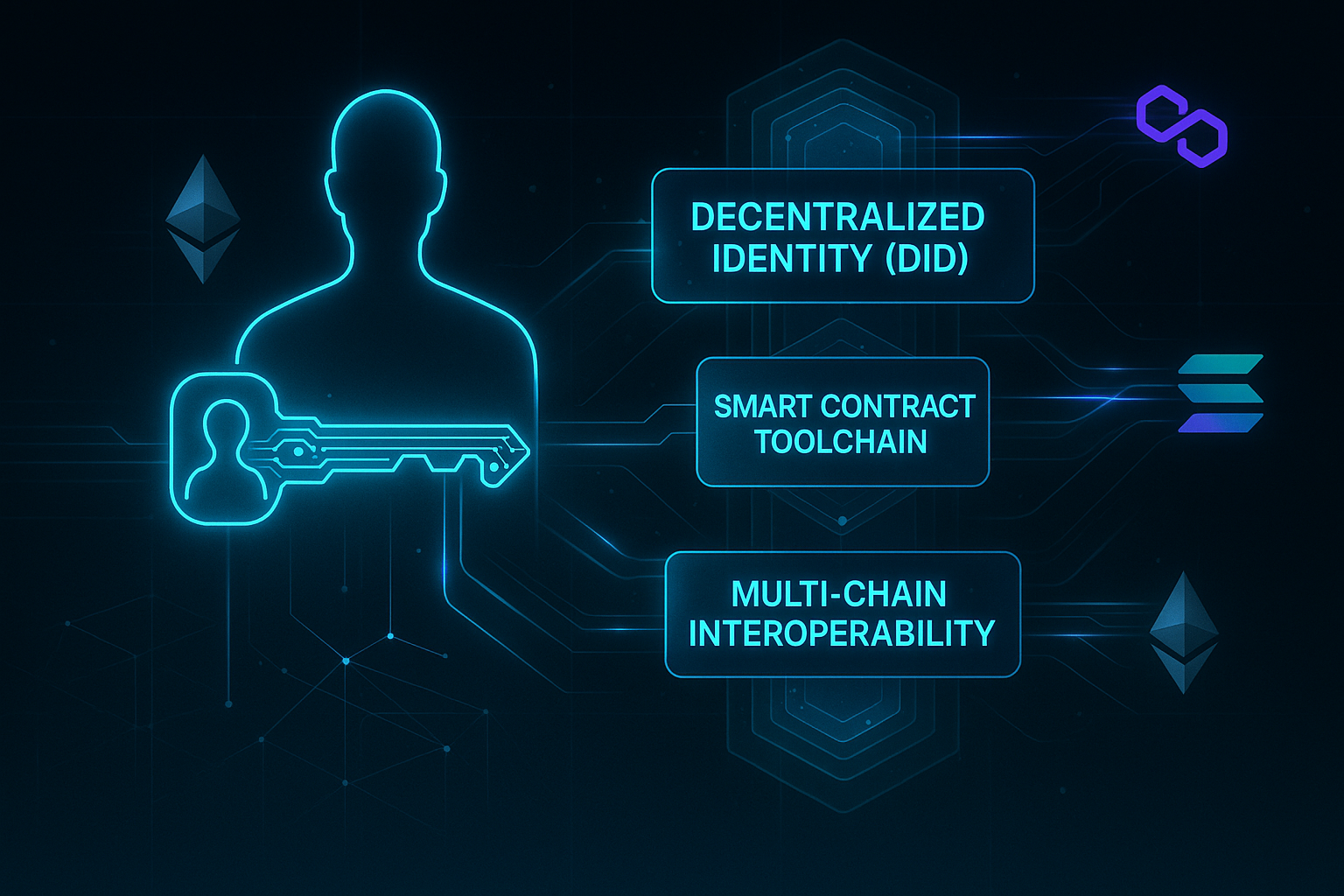
OpenFuture World is not merely another blockchain network; it is a holistic infrastructure stack designed to serve as the foundational layer for the next generation of the decentralized web. At its core, the platform’s vision is to dismantle the technical and experiential barriers that have hindered mainstream Web3 adoption. This involves creating a seamless environment where developers can build sophisticated dApps without deep expertise in cryptographic key management, and where users can interact with these applications using familiar, web2-like experiences underpinned by robust Web3 infrastructure.
The philosophy driving OpenFuture World is that for Web3 to reach its potential, it must prioritize usability, security, and interoperability equally. The platform’s architecture reflects this, constructed around several interconnected pillars: a self-sovereign on-chain identity system, a suite of powerful developer SDK tools, a cross-chain communication protocol, and a curated ecosystem for dApps and digital assets. By abstracting away complexities like gas fees, multi-chain interactions, and private key storage, OpenFuture World aims to allow creators to focus on application logic and user experience. Official OpenFuture World developer docs consistently emphasize this mission of abstraction and simplification, framing the platform as an “operating system” for the open web. This foundational vision sets the stage for its specific technological offerings, which are detailed in the following sections.
Core Features Web3 Identity Credentials and SDK Infrastructure
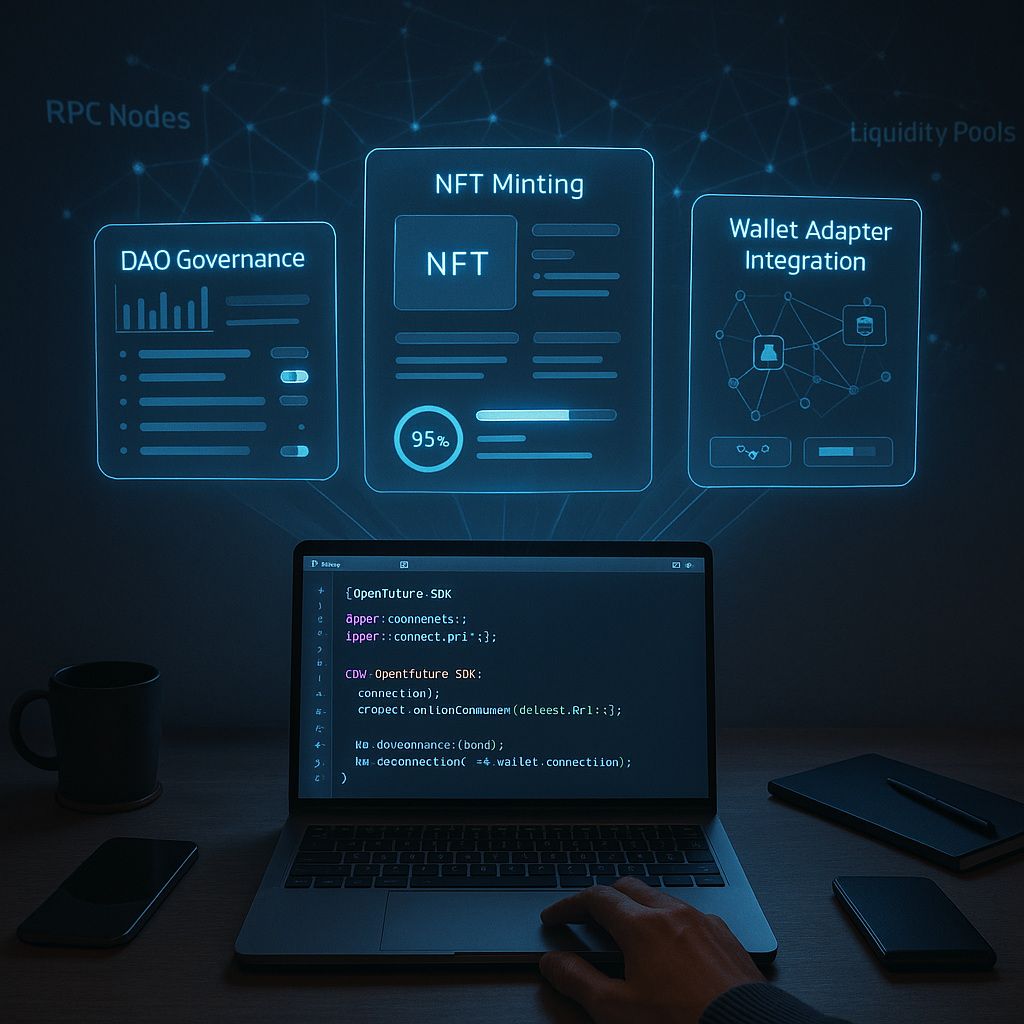
The technical prowess of OpenFuture World is manifested in its three primary feature sets: Decentralized Identity, a comprehensive Developer Toolchain, and its Cross-Chain Interoperability Engine.
- Decentralized Identity (DID) and On-Chain Credentials
A cornerstone of the platform is its robust decentralized identity (DID) system. In the current digital landscape, identity is siloed and owned by centralized entities. OpenFuture World introduces a self-sovereign identity framework where users control their digital selves. Each user creates a unique, persistent OpenFuture World identityoften referred to as an “OFID”which is a portable digital passport across the ecosystem and connected chains. This OFID can be enriched with verifiable on-chain credentials, which are attestations from issuers (e.g., educational institutions, DAOs, or other dApps) that are cryptographically signed and stored in a user-controlled data vault.
The system leverages zero-knowledge proofs (ZK) to allow users to prove specific claims about their credentials (e.g., “I am over 18” or “I am a certified developer”) without revealing the underlying sensitive data. This is critical for compliance AML/KYC processes where privacy is paramount. Furthermore, the platform is built with account abstraction at its core, allowing for features like social recovery of accounts, batch transactions, and gasless transactions where developers can sponsor network fees for their users. This significantly lowers the entry barrier for non-crypto native users.
- Developer SDK and Smart Contract Toolchain
For builders, OpenFuture World provides an extensive developer SDK and a unified smart contract toolchain. This suite of tools is designed to accelerate dApp development from ideation to deployment. Key components include:
- Universal RPC Nodes: Highly available and scalable RPC endpoints that provide reliable access to the OpenFuture World chain and, through its bridge, to other major networks.
- Wallet Adapter Integration: A standardized library that allows dApps to seamlessly connect with a wide variety of wallet adapter integration, from browser extensions to mobile OpenFuture World app download options, ensuring broad user accessibility.
- API Integration Services: Pre-built APIs for common functions like token swaps, NFT minting, and identity verification, reducing development time.
This infrastructure aims to make the OpenFuture World developer docs a one-stop shop for builders seeking to create everything from simple DAO governance tools to complex DeFi protocols.
- Multi-Chain Interoperability Protocol
Recognizing the multi-chain future, OpenFuture World does not operate as a walled garden. Its native multi-chain bridge and interoperability protocols enable the seamless transfer of assets and data between OpenFuture World, Ethereum, Polygon, Solana, and other major networks. This is complemented by a cross-chain messaging system that allows smart contracts on different chains to communicate, enabling truly interconnected dApp experiences. The platform’s approach to multi-chain interoperability is a key differentiator, positioning it as a hub rather than just another destination.
OpenFuture Tokenomics Utility Governance and Ecosystem Rewards
The OpenFuture World ecosystem is powered by a native utility token, often referred to in its OpenFuture World whitepaper as OFT. It is crucial to analyze its design from a functional perspective, avoiding speculative financial claims. The tokenomics are engineered to align the incentives of developers, users, and network validators.
- Network Utility: The OFT token is the primary medium for paying network transaction fees (gas) within the OpenFuture World ecosystem. Its use is also integrated into the platform’s account abstraction model, enabling flexible fee payment mechanisms.
- Governance: Token holders can participate in the platform’s DAO governance model. This involves voting on key protocol upgrades, treasury management, and the direction of the OpenFuture World grant program. This decentralizes control over the platform’s future development.
- Ecosystem Incentives: The token is used to reward participants who contribute to the network’s health and growth. This includes staking rewards for validators who secure the network through Proof-of-Stake consensus, and liquidity mining incentives for providers who deposit assets into designated liquidity pools to facilitate efficient trading on native decentralized exchanges.
- Access and Fees: Usage of premium features within the ecosystem, such as advanced API integration tiers or listing fees on the OpenFuture World NFT marketplace, may be denominated in OFT.
It is important to note that the OpenFuture World token price is subject to market forces and is not controlled by the founding team. The platform’s documentation explicitly states that the token is designed for utility and governance, not as an investment vehicle.
Developer Ecosystem SDK API and Integration Tools
A platform’s value is ultimately derived from the applications built on top of it. OpenFuture World has invested heavily in cultivating a vibrant developer ecosystem through superior tooling and support.
The OpenFuture World developer docs are a central hub, offering comprehensive tutorials, API references, and conceptual guides. The documentation covers everything from setting up a development environment to implementing advanced zero-knowledge proofs (ZK) for privacy-preserving applications. The platform’s smart contract toolchain supports popular programming languages and frameworks, lowering the learning curve for developers migrating from other Web2 or Web3 environments.
A key initiative is the OpenFuture World grant program, which provides funding, technical mentorship, and marketing support to promising projects building on the platform. These grants are often distributed through public hackathons, encouraging innovation in areas like decentralized identity (DID) applications, DAO governance tooling, and novel NFT royalties models. The availability of robust RPC nodes and wallet adapter integration means developers can spend less time on infrastructure and more time on their core product. For those looking to integrate existing services, the platform’s API integration services offer a plug-and-play path to adding Web3 functionality.
Security and Compliance KYC ZK Proofs and Smart Contract Audits
In a space fraught with security vulnerabilities and regulatory uncertainty, OpenFuture World has architected a multi-layered approach to security and compliance.
Security First:
The core protocol and its smart contracts have undergone rigorous security audit processes by multiple independent, third-party firms. The results of these audits are typically made public to foster transparency and trust. The platform also employs a proactive OpenFuture World bug bounty program, incentivizing white-hat hackers to discover and report vulnerabilities. To protect users from malicious front-running bots, the network incorporates MEV protection mechanisms at the protocol level. For user asset security, the platform offers both custodial vs non-custodial wallet solutions, giving users the choice between convenience and full self-custody, with advanced key management systems for the latter.
Compliance and Privacy:
The platform navigates the complex world of regulation by offering built-in tools for compliance. Its decentralized identity (DID) system can be integrated with verified KYC and compliance providers. Crucially, this can be done using zero-knowledge proofs (ZK), allowing users to prove they have passed KYC checks without exposing their personal data to every dApp they use. This privacy-centric approach to compliance AML/KYC is a significant step forward in reconciling regulatory requirements with the ethos of Web3. All data handling practices are detailed in the platform’s OpenFuture World privacy policy.
OpenFuture NFT Marketplace and Creator Tools
Beyond fungible tokens, OpenFuture World hosts a native marketplace for Non-Fungible Tokens (NFTs), designed with a focus on the creator economy. This marketplace is not just a trading venue but a suite of tools aimed at empowering artists, musicians, and other digital creators.
The OpenFuture World NFT marketplace supports a variety of token standards, ensuring compatibility with assets from other chains via its multi-chain bridge. A standout feature is its configurable NFT royalties system, which allows creators to programmatically receive a percentage of sales whenever their work is resold on the platforma fundamental right that is often overlooked on other marketplaces. The marketplace is deeply integrated with the platform’s on-chain credentials system; for instance, an NFT could serve as a verifiable ticket, a membership pass for a DAO, or proof of attendance at an event.
The process for creators is streamlined through the OpenFuture World app, which provides a mobile-friendly interface for minting, managing, and promoting their collections. This focus on creator tools underscores the platform’s broader goal of fostering a sustainable digital economy beyond pure speculation.
Grant and Developer Programs Incentives for Builders
Sustained ecosystem growth is actively managed through the OpenFuture World grant program and other builder-focused initiatives. This program is a multi-million dollar fund allocated from the ecosystem treasury to support projects that contribute meaningfully to the OpenFuture World infrastructure, tooling, or end-user applications.
Grants are typically awarded in tiers, ranging from small bounties for specific tool development to large, multi-stage grants for ambitious dApps. The selection process often involves community governance, where OFT token holders can signal their support for proposed projects. Beyond financial support, grant recipients gain access to dedicated technical advice from the core engineering team, priority access to OpenFuture World API integration, and promotional opportunities through official channels like the OpenFuture World blog updates and OpenFuture World community forum.
These programs are frequently highlighted in the OpenFuture World roadmap 2025 as a critical component for achieving network effects and ensuring a diverse and vibrant application landscape.
OpenFuture vs Competitors Comparison with Similar Web3 Platforms
To understand OpenFuture World’s position in the market, a neutral comparison with other Web3 infrastructure projects is useful. It exists in a competitive landscape that includes platforms like Ethereum L2s (e.g., Arbitrum, Optimism), Polkadot, and Cosmos.
- vs. Ethereum L2s: While L2s focus primarily on scaling Ethereum transactions, OpenFuture World differentiates itself with its native, integrated decentralized identity (DID) system and its stronger emphasis on account abstraction for user experience. Its multi-chain interoperability is also more native and generalized compared to most L2s, which are primarily tied to Ethereum.
- vs. Polkadot/Cosmos: These projects are pioneers in interoperability through parachains and zones. OpenFuture World competes by offering a more vertically integrated stack out-of-the-box, including its identity layer, SDK, and native marketplace, potentially offering a faster path to market for developers who want a full-suite solution rather than assembling one from disparate, specialized chains.
The key differentiator for OpenFuture World appears to be its deliberate bundling of identity, developer tools, and interoperability into a single, cohesive platform. This contrasts with a “modular” approach where projects pick and choose their preferred identity or interoperability solution from a marketplace of competing providers. MEXQuick News
Roadmap 2025 Upcoming Milestones and Expansion Plans
The OpenFuture World roadmap 2025, as detailed in official communications, outlines a clear path for the platform’s evolution. It is important to view roadmaps as forward-looking statements subject to change based on development progress and community feedback.
Key announced milestones for 2025 often include:
- Technical Upgrades: The full implementation of a zk-Rollup based scaling solution for its mainnet, further enhancing throughput and reducing fees.
- Ecosystem Expansion: Major initiatives to onboard over 100 new dApps through an expanded OpenFuture World grant program and global hackathons.
- Interoperability Enhancements: The launch date for new multi-chain bridge connections to additional Layer 1 and Layer 2 networks.
- Identity Evolution: Advancements in the decentralized identity (DID) protocol, including support for new types of on-chain credentials and broader adoption of its standards by external partners.
- Governance Maturation: The transition to a more advanced, fully on-chain DAO governance model for all major protocol decisions.
Progress against these milestones is typically tracked through regular OpenFuture World blog updates and community calls, which are announced on platforms like the OpenFuture World telegram discord channels.
The Role of OpenFuture World in a Multi-Chain Future
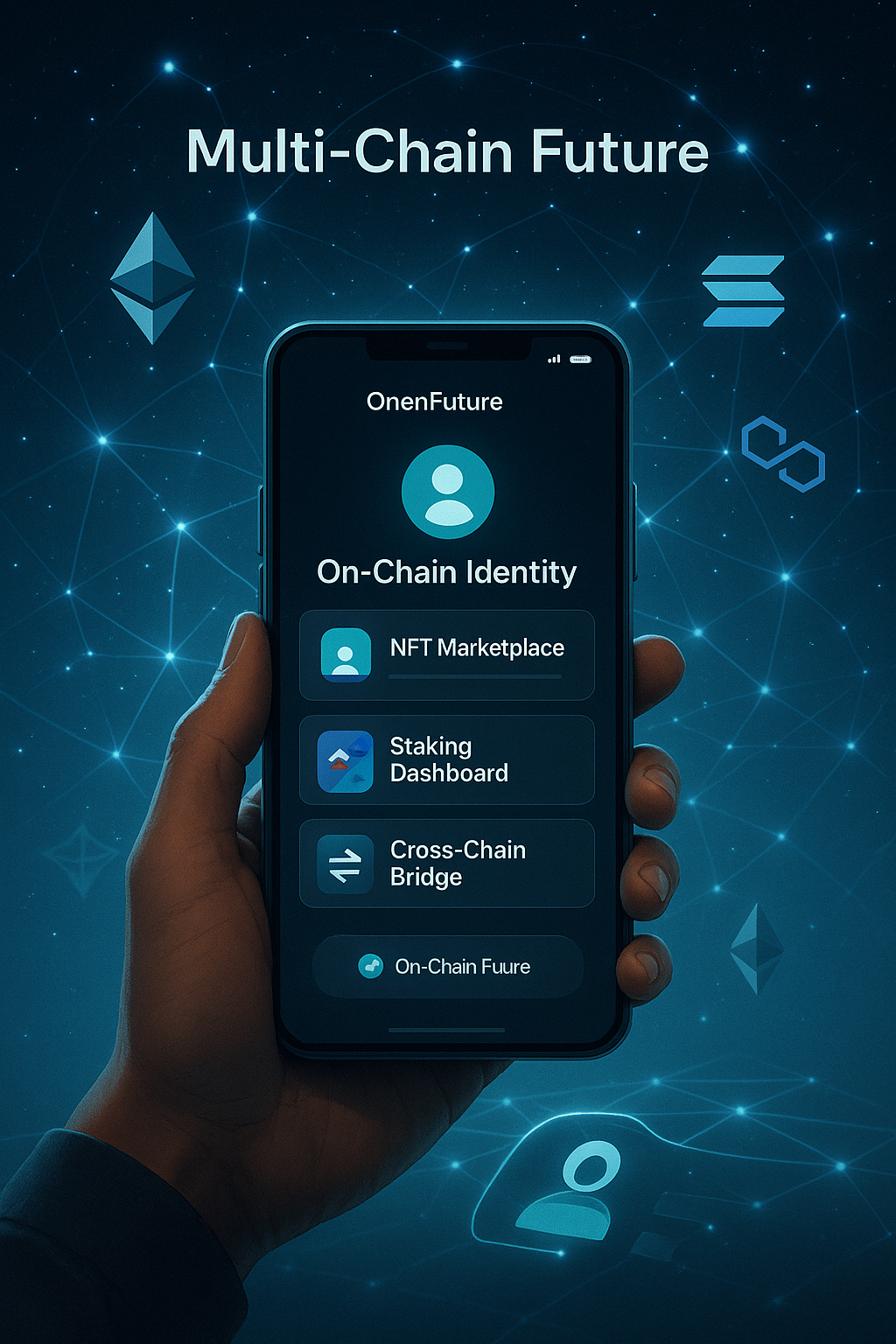
As the blockchain industry matures, the “one chain to rule them all” narrative has largely given way to a reality of a multi-chain ecosystem. In this context, OpenFuture World aims to position itself not as a sovereign chain vying for dominance, but as an interconnected hub specializing in identity and developer experience.
Its value proposition lies in its ability to serve as a user-centric gateway to the broader Web3 world. A user could maintain a single OpenFuture World identity to seamlessly interact with dApps on Ethereum, DeFi protocols on Solana, and gaming worlds on other networks, all while enjoying the benefits of gasless transactions and sophisticated key management. For developers, it offers a fertile ground to build user-friendly applications that can leverage the liquidity and communities of other chains without being limited by them.
The platform’s success will ultimately hinge on its executionits ability to deliver a secure, scalable, and genuinely useful infrastructure that attracts both builders and users based on its technological merits and the quality of its ecosystem, as detailed in neutral OpenFuture World platform review analyses.
Closing Section
OpenFuture World represents a significant and ambitious endeavor within the Web3 infrastructure landscape. Its focus on solving fundamental problemsusability through account abstraction, portability through decentralized identity, and connectivity through multi-chain interoperabilityaddresses critical friction points that have historically impeded broader adoption. By providing a comprehensive suite of developer tools and fostering its ecosystem through substantial grant programs, the platform is making a concerted effort to empower builders to create the next wave of practical decentralized applications.
This analysis, grounded in a review of its public documentation and technological architecture, presents OpenFuture World as a platform defined by its commitment to infrastructure reliability and ecosystem growth, rather than market speculation. As with any technology project in its growth phase, its long-term impact will be determined by its execution against its published roadmap 2025, the security and robustness of its live network, and the organic growth of its developer community. For those interested in the technical evolution of Web3, OpenFuture World is undoubtedly a project worth monitoring for its contributions to on-chain data availability, user-centric design, and the broader creator economy.
CONTENT RELATIONSHIP AND RISK DISCLAIMER
The publisher, MEXQuick, acts solely as a platform for news MEXQuick and educational information. In presenting this article, MEXQuick is purely providing informational content for educational and general knowledge purposes only.
It is expressly stated that:
MEXQuick has no affiliation, connection, or endorsement with the entities, projects, or tokens discussed in this article.
The information presented is not financial, investment, legal, or any form of advice or recommendation.
MEXQuick makes no representations or warranties of any kind regarding the accuracy, timeliness, or suitability of the information for any particular purpose.
Readers are strongly encouraged to conduct their own independent research and verification (DYOR – Do Your Own Research) before making any decisions or taking any actions.
By accessing this content, you acknowledge that MEXQuick is only providing information and shall not be held liable for any loss or damage arising from the use or reliance on the information presented.