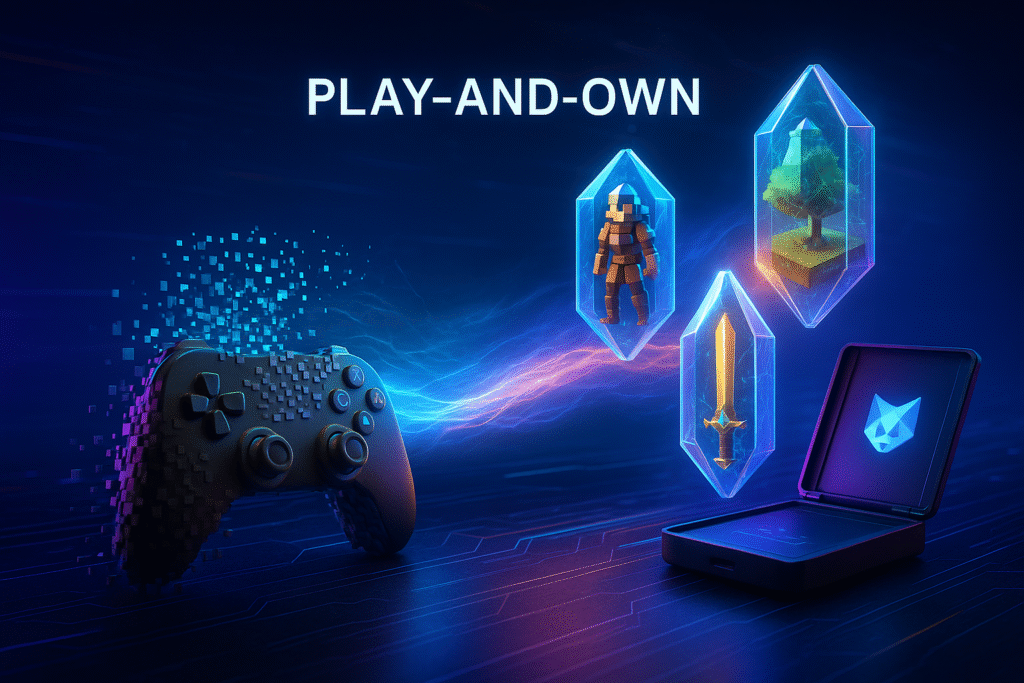
NFT Gaming represents a fundamental shift in the digital interaction between players and the games they love. At its core, it leverages blockchain technology to grant players verifiable, true ownership of their in-game assets such as characters, items, and virtual land through Non-Fungible Tokens (NFTs). This model, often intertwined with “play-to-earn” or “play-and-own” economies, enables players to potentially earn real-world value from their time and skill. This article provides a comprehensive, educational overview of the NFT gaming ecosystem as of 2025. We will explore its underlying mechanics, key platforms, economic models, and the evolving landscape, focusing on innovation and user education rather than speculation or financial gain. This is not investment advice; it is a guide to understanding a new paradigm in interactive entertainment.
What Is NFT Gaming and How Does It Work?
To understand what is NFT gaming, one must first grasp two key concepts: blockchain and NFTs. A blockchain is a decentralized, digital ledger that records transactions across a network of computers. An NFT, or Non-Fungible Token, is a unique cryptographic asset on a blockchain that certifies ownership and authenticity of a specific digital item. Unlike a cryptocurrency like Bitcoin, where every unit is the same (fungible), each NFT is one-of-a-kind.
In nft gaming meaning for beginners, this translates to in-game assets being minted as NFTs. When you acquire a powerful sword, a rare character skin, or a plot of virtual land in an NFT-based game, you are not just licensing it from the game developer as in traditional gaming; you are the sole owner of that digital asset. This ownership is recorded on the blockchain, making it transparent, secure, and transferable.
The operational flow typically involves:
- Acquiring Assets: Players obtain NFT assets by purchasing them, earning them through gameplay, or crafting them from other components.
- Connecting a Wallet: To interact with the game’s blockchain elements, players use a nft gaming wallets for beginners like MetaMask, Phantom, or Glow. These wallets are self-custodial, meaning you alone control your private keys and, by extension, your assets.
- Interacting with Smart Contracts: Core game functions like breeding a new creature, upgrading an item, or staking tokens are managed by smart contracts. These are self-executing contracts with the terms of the agreement directly written into code, which run on the blockchain.
- Trading on Marketplaces: Players can buy, sell, or trade their NFT assets on secondary nft gaming marketplace list such as OpenSea, Magic Eden, or game-specific marketplaces. This creates a dynamic player-driven economy where the value of assets is determined by supply and demand.
This foundational shift from a closed, centralized economy to an open, player-owned one is the bedrock of the NFT gaming revolution.
Evolution of NFT Gaming From Play-to-Earn to Play-and-Own
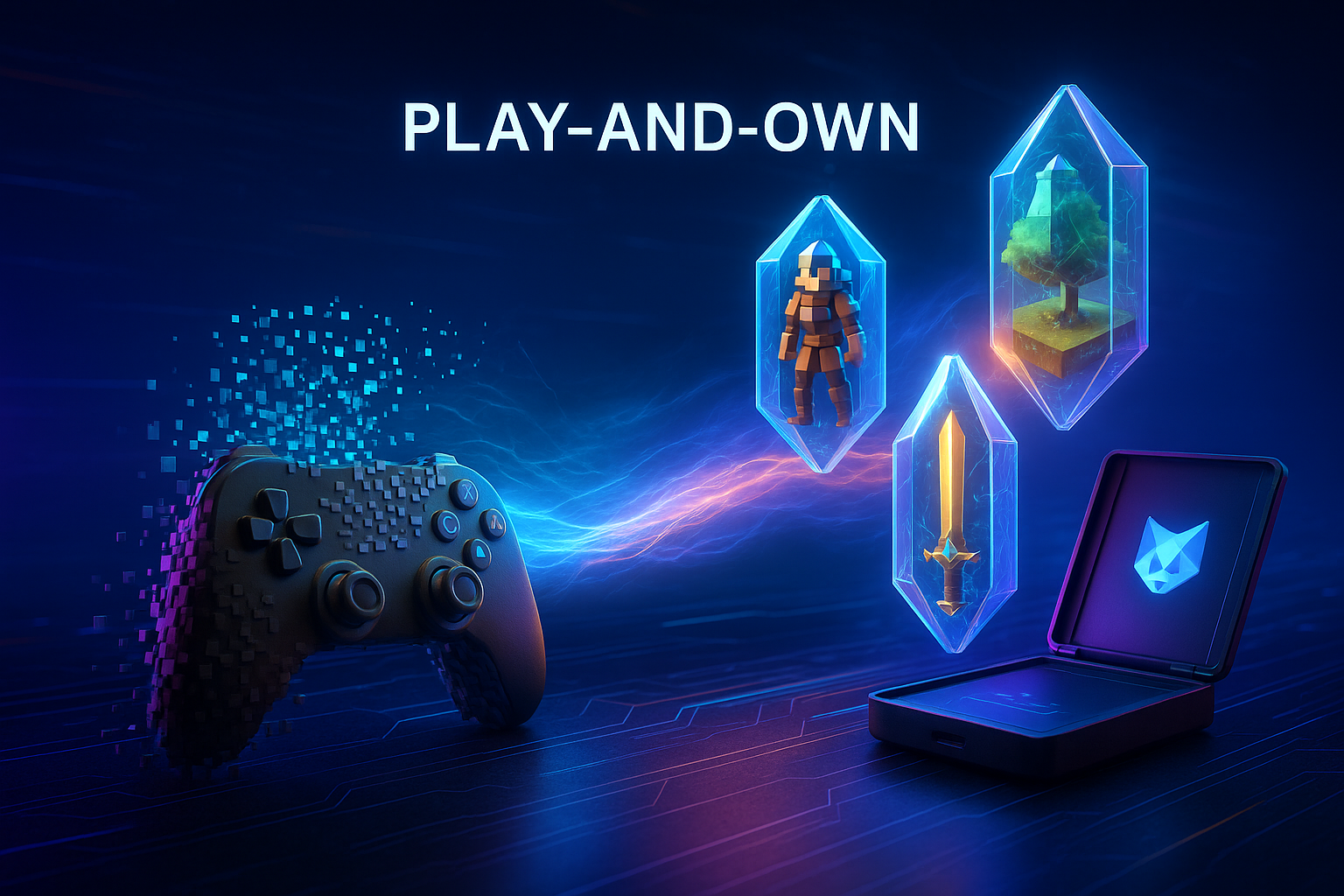
The NFT gaming landscape has undergone significant maturation since its early days. The initial wave, epitomized by games like Axie Infinity, popularized the play-to-earn economy. This model allowed players, particularly in developing nations, to generate substantial income by playing the game and selling the NFTs and tokens they earned. While revolutionary, this model faced sustainability challenges, as it often prioritized financial speculation over fun and was highly vulnerable to token inflation and market downturns.
By 2025, the industry has largely pivoted towards a more sustainable and gamer-centric philosophy: Play-and-Own. The emphasis is now on creating compelling gameplay loops where digital asset ownership is a feature that enhances the experience, not the sole purpose of playing. The goal is to build long-term engagement by making ownership meaningful for example, by allowing players to influence game governance, use their assets across multiple games (nft gaming interoperability cross chain), or derive unique utility from them that isn’t tied solely to their resale value.
Hybrid models have also emerged, blending traditional free-to-play mechanics with optional Web3 elements. Players can enjoy the game for free, with the option to purchase or earn NFTs that offer cosmetic enhancements, convenience, or deeper engagement with the game’s economy. This evolution reflects a broader industry effort to balance innovation with player retention and sustainable economic design.
Tokenomics Explained Rewards, Staking, and Game Currencies
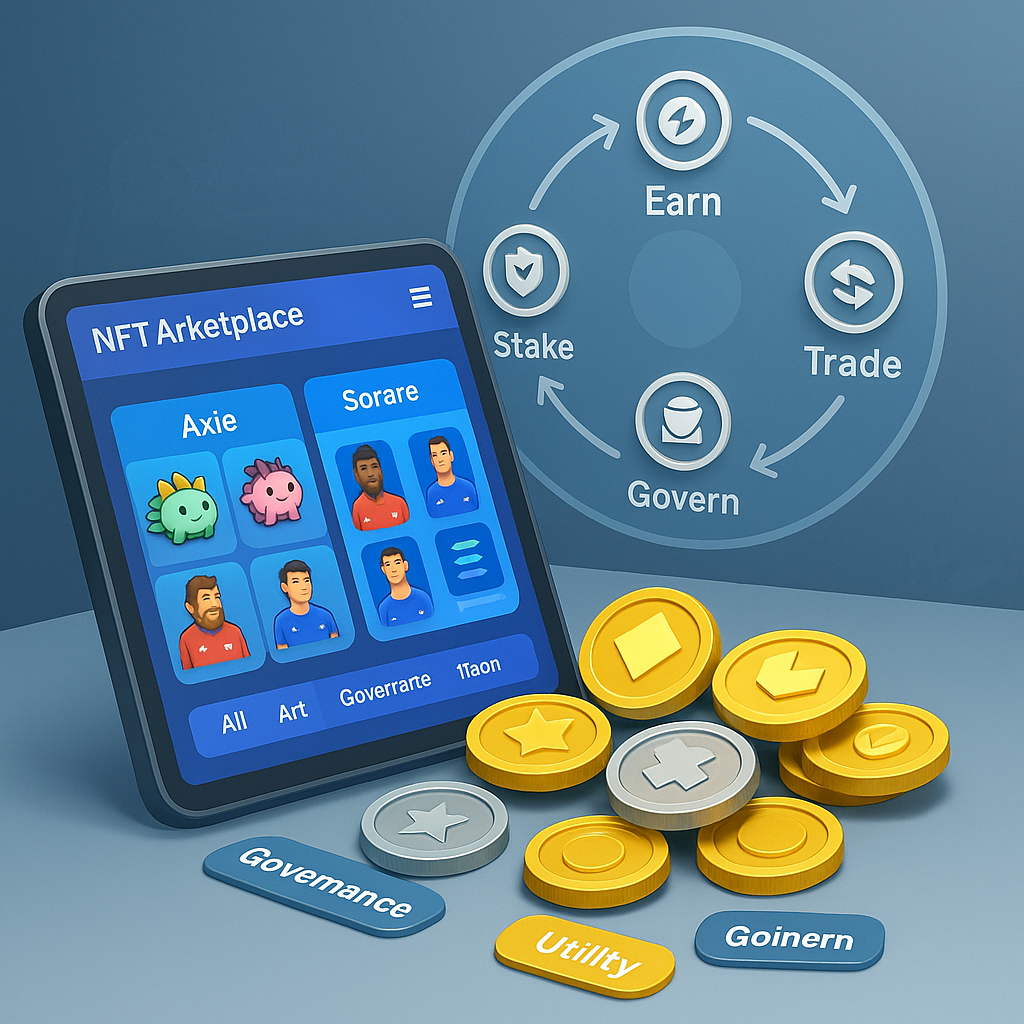
The economic engine of any NFT game is its tokenomics, the system that governs the creation, distribution, and utility of its digital currencies. Understanding nft gaming tokenomics explained is crucial for grasping how these ecosystems function. Most projects employ a dual-token economy to separate utility from value and combat inflation.
- Utility/In-Game Token: This is the “soft currency” of the game. It is typically earned abundantly through gameplay completing quests, winning battles, or daily logins. It is used for in-game actions like nft gaming breeding mechanics, crafting items, healing characters, or entering tournaments. Because its emission rate is high, its value is often more volatile and tends to be lower.
- Governance/Premium Token: This is a scarcer, more valuable token. It may be earned through high-level achievements, purchased on exchanges, or obtained via nft gaming airdrops. It often grants holders voting rights in the game’s Decentralized Autonomous Organization (DAO), allowing them to influence the game’s future. It can also be used for high-value transactions, such as purchasing rare NFTs or participating in nft gaming staking rewards. Continous At Here Trading
Staking is a common mechanism where players lock up their tokens in a smart contract to support the network’s security and liquidity. In return, they earn more tokens as a reward, creating a form of yield for long-term holders. A well-designed tokenomics model includes deflationary tokenomics mechanisms, such as “burning” (permanently removing) tokens from circulation through certain in-game actions, to maintain a healthy balance between token supply and demand.
NFT Gaming Platforms and Blockchains (Solana, Polygon, BSC, Ethereum)
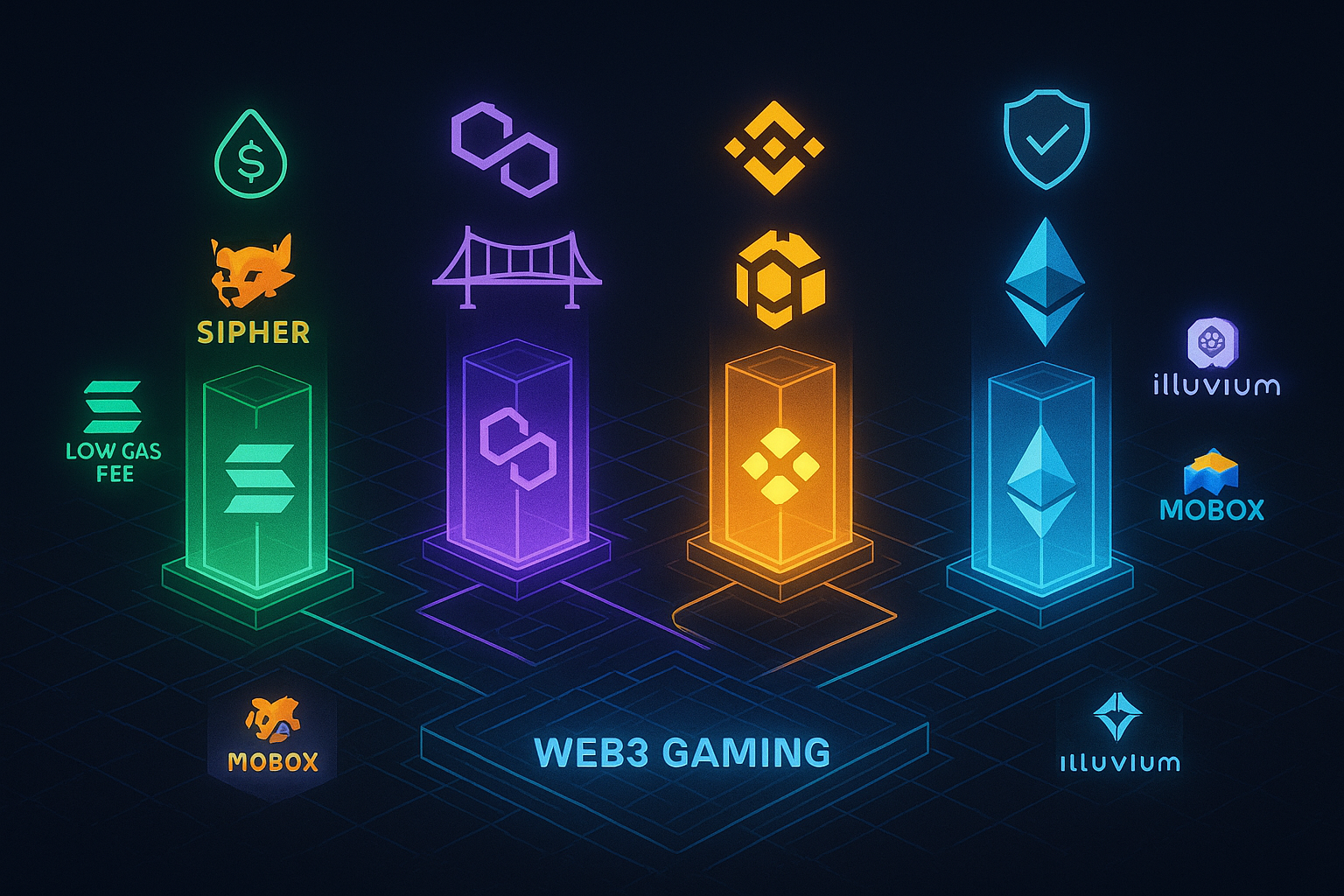
The choice of blockchain is a critical decision for any NFT game developer, as it directly impacts transaction speed, cost, and security key factors for a smooth user experience. The landscape is multi-chain, with several major ecosystems hosting popular titles in 2025.
- Ethereum: The pioneer, known for its robust security and decentralization. However, high nft gaming gas fees and slower transaction times have made it less ideal for high-frequency, low-cost gaming transactions. It remains a hub for high-value NFT collections and more strategic, slower-paced games.
- Solana: Nft gaming on Solana has flourished due to its high throughput and extremely low transaction fees. This makes it ideal for games requiring fast, seamless interactions. Its ecosystem is home to many of the most player-friendly and performance-oriented titles.
- Polygon: A Layer-2 scaling solution for Ethereum, nft gaming on Polygon offers Ethereum-compatible security with significantly lower fees and faster speeds. It has become a major hub for large gaming studios experimenting with Web3 integration, offering a balanced approach.
- BNB Smart Chain (BSC): Nft gaming on BSC is known for its low costs and deep integration with the Binance ecosystem, making it easy for users to onboard and trade tokens. While sometimes criticized for being more centralized, it hosts a wide array of games with strong regional appeal.
Emerging networks like Immutable X, Sui, and Avalanche are also gaining traction by offering specialized gaming infrastructure, including zero-gas fee marketplaces and enhanced scalability.
Free-to-Play and Move-to-Earn Models in 2025
The “play-to-earn” label has evolved into more nuanced and accessible models. Nft gaming free to play is now a dominant strategy for user acquisition. These games allow anyone to download and start playing without any upfront cost, similar to Web2 games like Fortnite. The Web3 element is introduced gradually; players might earn non-NFT resources that can later be used towards crafting an NFT, or they can choose to purchase NFT “starter packs” to accelerate their progress or unlock exclusive content.
Another innovative subgenre is nft gaming move to earn. These applications, often in the form of mobile apps, reward users with tokens or NFTs for physical activity like walking, running, or completing workout routines. The nft gaming app android ios availability of these projects has been key to their mass adoption. They represent a fascinating convergence of health, gaming, and decentralized finance, though their long-term economic sustainability remains a key area of development and research. MEXQuick News
NFT Marketplaces, Guilds, and Scholarship Systems
The vibrant economies of NFT games are facilitated by a supporting infrastructure.
Marketplaces: Platforms like OpenSea, Magic Eden, and Blur serve as the primary venues for trading game assets. A nft gaming marketplace list is essential for players to discover where their game’s assets are traded. These platforms facilitate peer-to-peer trading and often enforce secondary sales royalties, sending a percentage of every sale back to the original game developer, creating a new revenue stream.
Guilds and Scholarships: A unique social innovation in this space is the emergence of nft gaming guilds and scholarships. Guilds are communities, often structured as DAOs, that acquire high-value NFT assets (like competitive gaming characters or virtual land) and loan them out to players who cannot afford the initial investment. These players, known as “scholars,” use the guild’s assets to play and earn, sharing a portion of their rewards with the guild. This system lowers the barrier to entry for nft gaming how to start and provides a form of decentralized employment for thousands of players globally.
Security, Gas Fees, and Player Protection
As with any frontier technology, navigating NFT gaming requires awareness of risks. Nft gaming security tips are not optional; they are essential.
- Self-Custody Risks: Using a self-custody wallet means you are your own bank. Losing your seed phrase (private keys) means losing your assets permanently, with no customer service to recover them.
- Scams: Nft gaming scams to avoid include phishing websites, fake Discord or Telegram admins (nft gaming community discord telegram), and “rug pulls” where developers abandon a project after raising funds. Always verify official links, enable two-factor authentication, and be skeptical of offers that seem too good to be true.
- Smart Contract Risk: Vulnerabilities in a game’s smart contract can be exploited by hackers. Players should prioritize games that have undergone professional smart contract audits.
- Gas Fees: As mentioned, nft gaming gas fees are the cost of executing transactions on a blockchain. These can fluctuate based on network congestion. Choosing games on low-fee networks or timing transactions can help manage costs.
Understanding these risks is a fundamental part of responsible participation in the Web3 gaming ecosystem.
NFT Gaming vs Traditional Gaming Ownership and Economy
The fundamental distinction between nft gaming vs traditional gaming lies in the concept of ownership. In a traditional game like World of Warcraft or Call of Duty, you spend countless hours and dollars acquiring items and levels. However, these assets are legally owned and controlled by the game publisher. They can be altered, devalued, or even taken away if you violate terms of service or the server shuts down.
In NFT gaming, the paradigm shifts to player-owned asset models. If you own an NFT sword, it is yours. You can sell it, trade it, or use it in other games that support it (the goal of interoperability). This transforms games from walled gardens into open economies where players have true equity and agency. This also introduces complex nft gaming legal and tax considerations, as the buying and selling of NFTs may be considered taxable events in many jurisdictions, a point often overlooked by newcomers.
Developer Perspective SDKs, Cross-Chain Tools, and Community Jobs
For nft gaming developers jobs, the space offers a new frontier of opportunity. Major game engines like Unity and Unreal Engine now offer robust SDKs (Software Development Kits) for integrating blockchain functionality, making it easier for traditional game studios to explore Web3.
The technical challenges are significant. Developers must design for player retention in an environment where players can liquidate their assets and leave at any time. They must build robust anti-bot systems to prevent economic manipulation and ensure fair play. Furthermore, the vision of interoperable avatars and assets across multiple games requires solving immense technical and business development hurdles, including standardized metadata and cross-game balance.
The community is also a vital component. Active nft gaming community discord telegram channels are not just for support; they are central to governance, feedback, and fostering the esports scene, with nft gaming esports tournaments becoming a major driver of engagement and viewership.
The Future of NFT Gaming Regulation, Sustainability, and Innovation
Looking ahead, the future of NFT gaming will be shaped by several key trends:
- Regulation: As the industry matures, clearer nft gaming legal and tax frameworks will emerge from governments worldwide. This will provide much-needed clarity for developers and investors but may also impose new compliance requirements.
- Sustainability: The focus will remain on creating fun-first games with sustainable economies that are not purely extractive. This involves sophisticated token emission schedule planning and a move away from hyper-inflationary rewards.
- Technological Innovation: We will see more advanced uses of NFTs, such as dynamic NFTs that change their appearance or attributes based on in-game achievements or external data via oracles. The pursuit of true cross-platform gameplay between Web2 and Web3 platforms will continue.
- Mainstream Adoption: The line between “Web2” and “Web3” gaming will continue to blur. Major traditional gaming studios are expected to integrate NFTs and blockchain in ways that feel familiar and additive to their massive player bases, potentially onboarding millions to the concept of digital asset ownership
Closing Section NFT Gaming Explained Play Earn and Own in Web3
The rise of NFT gaming marks a pivotal moment in the history of interactive entertainment, championing a new model built on the principles of digital asset ownership, decentralized economies, and enhanced player agency. The journey from the early, financially-driven “play-to-earn” experiments to the more nuanced “play-and-own” models of 2025 demonstrates the industry’s growing focus on sustainability and engaging gameplay. As blockchain technology becomes more seamless and user-friendly, its potential to redefine the relationship between players, developers, and virtual worlds is immense.
For players, developers, and observers, engaging with this space responsibly is paramount. This means prioritizing education, conducting thorough due diligence on projects, understanding the inherent risks from market volatility to security threats and always remembering that the core of any great game should be the experience itself. The true measure of success for NFT gaming will not be the speculative value of its assets, but its ability to create more profound, persistent, and player-empowered digital worlds. As MEXQuick’s analysis consistently highlights, true gaming innovation lies in empowering players not speculation.
MEXQuick Disclaimer:
MEXQuick is a provider of news, educational content, and market analysis. All information presented on our platforms is sourced from publicly available information in the digital realm and is offered for informational and educational purposes only.
This information should not be construed as financial, investment, trading, or legal advice. MEXQuick is not a financial advisor and has no affiliation, endorsement, or partnership with any specific projects, games, or tokens discussed unless explicitly stated otherwise.
The NFT gaming, blockchain, and cryptocurrency sectors are highly volatile and experimental. You should be aware that you could lose your entire capital. Always conduct your own independent research (DYOR) and consult with a qualified professional before making any financial decisions. MEXQuick shall not be held liable for any decisions made or actions taken based on the information provided.